
Organic Cotton VS
Let’s talk about cotton…
As a clothing brand focussing on sustainable ethical high quality clothing, some people ask: What’s the difference between cotton and organic cotton? So here’s why.
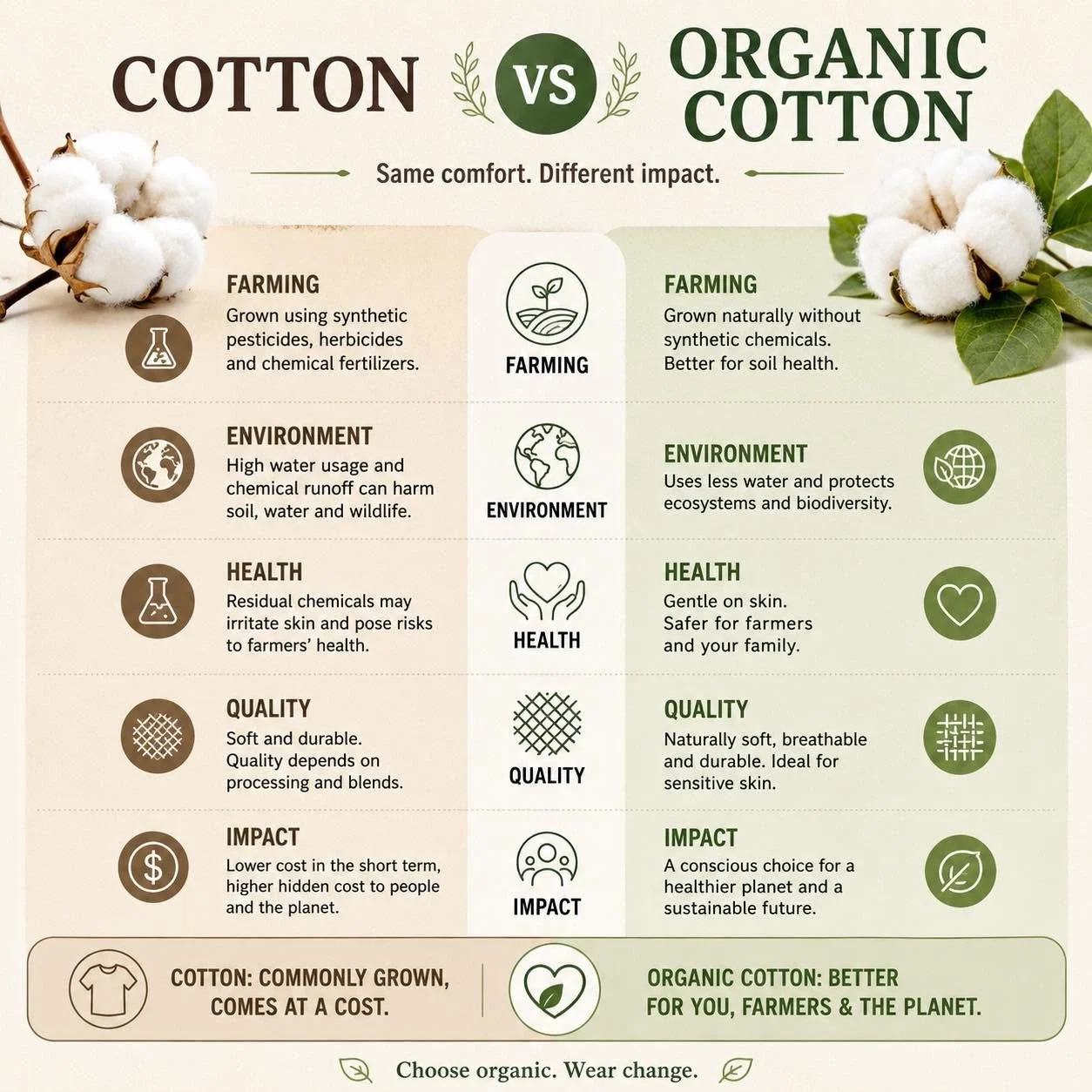
Organic cotton and conventional cotton come from the same plant, but differ vastly in how they are grown and processed. While conventional cotton uses intensive chemicals and irrigation, organic cotton relies on natural farming methods, offering superior benefits for the environment and sensitive skin.
1. Farming Practices
Organic Cotton is grown from non-GMO seeds without synthetic pesticides, herbicides, or artificial fertilisers. Farmers use natural methods like crop rotation and compost to keep soil healthy.
Regular Cotton is heavily reliant on genetically modified (GM) seeds and synthetic chemicals. Conventional cotton cultivation is known as one of the "dirtiest" crops, utilising approximately 16% of the world's insecticides despite only covering a small fraction of farmland.
2. Environmental & Water Impact
Organic Cotton: Because healthy, compost-rich soil acts like a sponge, organic cotton uses significantly less water – often up to 91% less – and relies heavily on natural rainfall rather than artificial irrigation.
Regular Cotton is an extremely thirsty crop. It often requires intense irrigation which can deplete local water sources. Runoff from synthetic fertilizers and pesticides pollutes nearby rivers and ecosystems.
3. Skin Sensitivity & Health
Organic Cotton is often hand-picked, which leaves the fibers longer and stronger, resulting in a softer, more durable, and hypoallergenic fabric. It is highly recommended for people with eczema or sensitive skin as it contains no harsh chemical residues.
Regular Cotton: Harsh chemical treatments and dyes can remain trapped in the fabric, potentially causing skin irritation or allergic reactions in vulnerable individuals.
4. Cost and Availability
Organic Cotton is generally more expensive due to the higher labor intensity and lower crop yields per acre.
Regular Cotton is far cheaper to produce in massive quantities, making it highly accessible and ubiquitous in fast fashion.
5. Certifications
To guarantee you are getting genuine organic cotton – and to avoid "greenwashing" – look for the Global Organic Textile Standard (GOTS) certification. This gold-standard label guarantees not only the farming methods but also that the manufacturing and dyeing processes are free from hazardous chemicals.
So there you have it.